The temptation of Jesus

The Text: Matthew 4:1-11

Grace and peace to you from God our Father and the Lord Jesus Christ. Amen.
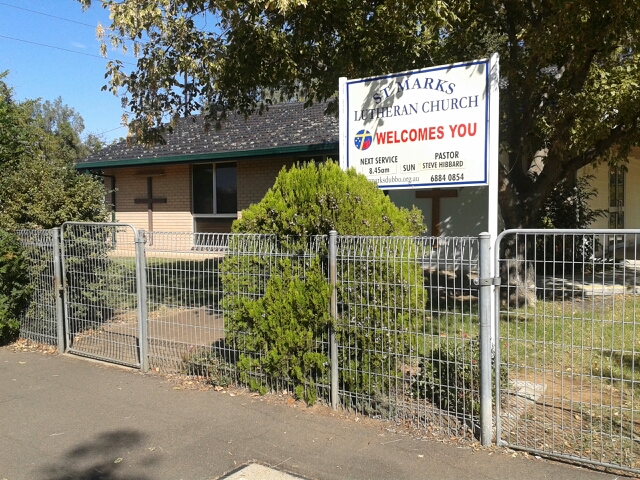
Today’s gospel reading deals with the realities of sin and temptation, grace and
faith. Our gospel reading identifies Jesus’ faith in the word of God. His faith was
demonstrated in the face of temptation.
As Christians we believe that sin has power – a deadly power that comes from the
evil one. We also believe that faith has power – a life-giving power that comes from
God.
In our lives we experience a struggle between these two powers. Martin Luther
often spoke about Christians being saints and sinners at the same time.
When we put our faith in God we can be sure that Satan will want to throw a
temptation or two our way. For example, we all have a dominant life value that we
unconsciously base our decisions on. For some this might be the desire for fun or
comfort or safety. It might be the desire for power or pleasure or to please others.
Satan loves to play with these desires and to lead us to think that we are the most
important people in the world and that everything should revolve around us.
Satan loves to challenge our faith and seeks to twist the truth to lead us away from
serving God.
When natural disaster or personal tragedy comes our way, Satan will try to tempt us
into believing ‘God doesn’t love me. God is punishing me.’ If you ever experience
this, stop! And remember what the scriptures say.
In the scriptures we will find a completely different explanation to disaster and
tragedy. Romans 8:22 says. We know that all that God created has been groaning.
It is in pain as if it were giving birth to a child. The created world continues to groan
even now.
Scripture makes it clear that there will come a time when there will be a new
heaven and a new earth and the old order of things will pass away and death will
be no more. Regardless of what happens in this world, will you keep your faith in
God’s promise that he is making all things new?
Even when disasters and tragedies leave us feeling as if we are small and
powerless, will we keep the faith?
There is an old Scandinavian legend that explains this so well. It is about the mighty
Thor and how one day he visited the land of the giants.
When Thor arrived there he found that the giants were engaged in
various contests of strength. They asked him if he would like to take part
in their games. He said yes. So they proposed three tests of strength for
him.
First Thor was asked to drink all the liquid in a large two handed drinking
bowl. He tried to drink it. And he drank as much as he could. But only a
tiny portion of the liquid in the bowl had disappeared. Finally he had to
put down the bowl and admit defeat. To him the giants seemed
sympathetic – and they proposed something a bit easier for his second
test.
A black cat was walking by and Thor was instructed to lift it up. He
grabbed hold of the animal, thinking it should be easy to hoist it up. He
strained and tugged as hard as he could but he couldn’t even begin
to budge the cat.
By this time the giants were beginning to be openly amused at Thor’s
predicament. “You are supposed to be strong”, they said, “but it seems
you are not. Well…we will give you something even easier for your third
test.”
So for the third test the giants challenged Thor to a wrestle with an old
woman. With every bit of strength that Thor could muster he grabbed
hold of the old woman, but all his pushing and pulling and twisting was
in vain. He simply could not meet the challenge.
As Thor, humbled and dejected, left the giants to head back home,
one of them went with him for a part of the way and told him that
there was magic in the contests. He said:
“The cup contained the sea and who can drink that? The cat was the
evil in the world, and who is able to lift that up and take it away? And
the old woman was time, and who is able to contend with her?”
When it comes to sin and its effect on the world, we are truly living in the land of
giants. The sin of all people causes the world to groan in pain. We are tempted to
give up in despair – feeling that nothing we can do will make a difference;
believing that there is no help or hope for us or our world.
Maybe this is the greatest temptation of our time. Maybe our greatest temptation is
to give up hope. This might just be the greatest work of Satan in our world –
tempting people away from putting their hope in God and his Holy word.
But friends, we have within us: one who is stronger than the world; one who is
greater than the tempter; one who has triumphed over evil both in life (as we see in
Jesus’ temptation today), and in death (as we see in Jesus’ death and resurrection).
Most people dwell too much on the negative side of things. They see the problems
but they don’t take hold of the solution. That solution is that the good news of
salvation that is unconditionally offered to all.
In our life we so quickly fall into despair on account of the giants we face: we forget
the stories of hope that God gives us, like the story of David and of how one small
stone in his hands brought an end to Goliath who threatened his nation and
caused even Saul and his mighty army to give up hope.
So too, we have a saviour: one who remembers who we are; one who loves us as a
father loves his children; one who seeks to nurture us as a mother nurtures her baby.
This saviour has ventured into the same troubled waters that we live in each day. He
has battled the currents – fought the enemies – and shown that he is able. He also
shows us that when we ‘swim’ with him – we are able too!
Our saviour remembers who we are and he loves us, and seeks the best for us. He
knows that we are weak swimmers in the deep waters of sin. He knows that we will
flounder and thrash, grow tired and sink. He knows the waters we are in. And he
does not ignore us.
Our saviour reaches out to us
– he calls out to us.
– he seeks to guide us and help us – and like all good parents
– he forgives us and does all that he can to make sure that we start each day
anew, refreshed and surrounded in love.

Super strength

The Text: Matthew 17:1-9

Everyone here, I am sure, has heard of Superman. Maybe you don’t know too
much about him and have never been a fan of this comic book character but you
know that he has super human strength, is “faster than a speeding bullet, more
powerful than a locomotive and able leap tall buildings in a single bound” – to use
the opening words of the old TV series. There are some very interesting facts behind
this comic book character.
The character was first created in 1933 by a shy, spectacled Jewish teenager who
fretted about his lack of popularity. Convinced that some miracle could transform
him from a nerd to a hunk, he vented his frustration by writing comic strip scenarios.
He showed them to his best friend, who drew characters and scenes to
accompany the story line. The two boys, Jerry Siegel and Joe Schuster, created a
superhuman extra-terrestrial disguised as a clumsy reporter named Clark Kent. In
June 1938 the first Superman comic book appeared.
Whether this was deliberate or not there are strong biblical overtones in the
Superman story. Like the way Superman comes to earth from another planet as a
baby, is rescued from the capsule that brought him here, is adopted by strangers
and grows up to confront evil and rescue those in distress. That is so much like the
stories of Moses we find in the Bible.
There are also messianic overtones. Kal-El (Superman’s real name), the only son of
Jor-El, is sent to a world in need of salvation. (El is Hebrew word for God).
Superman’s father says, “Even though you’ve been raised as a human being you’re
not one of them. … They lack the light to show the way. For this reason above all …
I have sent them you . . . my only son (From Superman Returns). He arrives on a farm
in a star-shaped container. People tell him they don’t need a saviour, but he knows
full well that they really do.
Superman is, of course, not real. He is an imaginary character but one who isn’t
totally irrelevant to this day and age. Kids pretend to be able to fly like Superman
and run around the house with hands above their heads making a whooshing
sound. Even as adults we would all like to have the strength and courage of the
‘Man of Steel’ for those times when things get out of control. When our problems
are bigger than our ability to handle them, it would be great if we could have the
strength and power to overcome them.
What are some of the things that throw us off balance?
Disappointment, disagreement, discontent, disillusionment, distress, disunity,
discouragement, discomfort, disenchantment, disability, disgruntlement, disloyalty,
dissatisfaction, disapproval, disquiet, disharmony, disobedience, discrimination,
disasters, disorientation, disputes, dissent, distrust, distraction, disingenuousness
(there’s one to look up) and whatever other word that starts with “d” that describes
what causes you to be “down in the dumps”.
What can be done when we are just worn out and tired from life’s hassles?
What can be done when the pressures and the worries get the better of us and
there is no joy anymore?
This week we will enter the Lenten season but before we head for Jerusalem for the
events of Good Friday and Easter we travel with Jesus to the top of a mountain.
Jesus withdraws from the noise and busyness of everyday life before heading off
into the events that would lead to his death.
Jesus knows that the days which lay ahead will be filled with every trial known to
human beings. Put yourself in the same situation as Jesus, knowing full well what
horrors are soon to happen. Knowing what terrible pain and suffering is to come
would weaken the bravest heart. It is true Jesus is a special person; nevertheless he
experienced all the emotions and misgivings that we experience.
And so Jesus goes to the top of a mountain to be with his heavenly Father. He
spends the time in prayer. It is interesting to note that every time Jesus is confronted
with a difficulty or personal struggle he first goes to God in prayer. And here again
he goes to God for strength for his mission.
And while Jesus is there on the mountaintop, away from the noise and
hubbub of the rest of the world, he meets with Moses and Elijah. This meeting has on
its agenda what will happen to Jesus when he goes to Jerusalem. They talked of his
dying and rising (Luke 9:31). They encourage Jesus, reminding him of God’s plan of
salvation and how the events about to take place are a fulfilment of all that is
spoken about in the Law and the Prophets. Maybe this was God’s way of keeping in
perspective the suffering Jesus was about to endure – yes, it will be horrible but it will
bring untold blessing to sinners all over the planet.
Then comes the cloud, a sign of God’s presence. And from the cloud a voice
speaks, “This is my Son, whom I have chosen”. “This is my Son whom I love and whom
I have sent to be the saviour of the world”. With this reassurance of love and the
encouragement of Moses and Elijah, Jesus continues his journey to Jerusalem.
For Jesus, Jerusalem meant suffering.
Maybe you have your own personal “Jerusalem”—those times when the events and
upsets, the pressures and spiritual struggles that leave you wondering how you will
ever cope?
Your Jerusalem might include a doctor’s comment, “There’s something I need to tell
you about the results of your tests”. Your Jerusalem might be that phone call that
announces the sudden death of someone close.
Your Jerusalem might be a troubled relationship. You want things to be different
between you and that other person but it just isn’t happening.
Your Jerusalem might be the disappointment you feel when your dreams and plans
fall into a heap.
Your Jerusalem might be difficult people whom you have to deal with. You do your
best but in the end there is someone who finds fault and cuts away any confidence
which you had.
Your own personal Jerusalem may be your discipleship. Jesus calls us to deny
ourselves and take up our cross and follow him. This is a call by Jesus to be disciples
who are willing to make sacrifices when it comes to following Jesus or reaching out
to help and get alongside of someone in need, or giving of our best in our
workplace.
Sacrifice is not a popular concept these days. We are so used to asserting our rights
and getting what we want that sacrifice is a really difficult thing?
We struggle to sacrifice just a little of our time to worship God with our fellow
Christians or talk with him daily.
We know that God calls us to show love, patience, forgiveness and understanding
but we find it hard to sacrifice our own needs and wants for the sake of the benefit
of someone else.
We know that discipleship calls us to put Christ first in our lives and be committed to
him just as he is committed to us but somehow we manage to get side tracked by
all kinds of trivia. We want to be true disciples but we feel so inadequate. This is our
Jerusalem.
When it came to facing Jerusalem, what did Jesus do? He withdrew for a while into
the presence of God and was reassured and strengthened for his mission. That’s
where we will find forgiveness, strength and assurance – in the presence of God.
Maybe you have resisted getting close to God and kept him at an arm’s length?
Maybe you know about the death and resurrection of Jesus as interesting facts but
never taken in that he did it for you and really trusted his love for you?
Maybe you have never really thought of God as right here, right now, available,
ready to help, willing to strengthen and support you?
Maybe you have floundered under the weight of trouble but have never taken
seriously the promises of God? Promises like:
“Do not be afraid—I am with you! I am your God—let nothing terrify you! I will make
you strong and help you; I will protect you and save you” (Isaiah 41:10, TEV). The
almighty and all powerful God of the universe is making that promise to you
personally. That’s fantastic!!
Our God is a God who stands by his people and gives them the strength to cope
with whatever crops up along life’s journey. Our God is a God who has
demonstrated his love for us on the cross and he is not about to abandon us now or
any time in the future. Jesus died a horrible death because of his love for each of
us. That’s how much God cares for us. It is confidence in God’s love for us that led
the psalmist to say:
“Even if I go through the deepest darkness, I will not be afraid, Lord, for you are with
me. Your shepherd’s rod and staff protect me” (Psalm 23:4, TEV).
And again, Psalm 40:11–12a (TEV)
11 LORD, I know you will never stop being merciful to me.
Your love and loyalty will always keep me safe.
12 I am surrounded by many troubles—
too many to count!
It’s amazing how positive the apostle Paul could be in the face of trouble. He
explains it like this, “I have learned this secret, so that anywhere, at any time, I am
content, whether I am full or hungry, whether I have too much or too little. I have
the strength to face all conditions by the power that Christ gives me” (Philippians
4:12b,13).
We too know that, come what may, God’s presence and power enables us to rise
above whatever it is that is getting us down.
When everything dictates that you “call it quits”, “give up” “throw in the towel” you
are able to say with the psalmist, “I trust your love” (Psalm 13:4 CEV). The cross is a
symbol of the love that God has for you.
From under the shadow of the cross you are certain that your sins are forgiven and
death has been defeated. Even if the worst should happen, you are at peace,
certain of God’s loving hands which surround you.
In the shade of the cross you receive life giving food and drink, the body and blood
of Jesus which encourages and sustains you through every trial to the point where
you are able to say, “With God on my side, what trouble can really hurt me?
Nothing in all creation is able to separate me from the love of God in Christ Jesus
our Lord” (Romans 8:39).
In the shade of the cross you can take time out and take to God that which is
bugging you and be reassured and strengthened.
In the shade of the cross you go about your work and relationships ready to boldly
share the love that Christ has shown to you in whatever way you can.
Superman is just make believe, but you have super powers at your disposal. You are
super men and super women because you can say, “Christ gives me the strength to
face anything” (Phil 4:13 CEV).

Be What You Are

The Text: Matthew 5:13-20
Some years ago the story was told of a 30-year-old man who spent most of his life
as an imposter: at the age of 16 he posed as an airline pilot; at 19 he posed as a
paediatrician. Later, he was an assistant district attorney. He was caught in the end.
But by that time he had passed cheques amounting to 2.5 million dollars. He was
not what he appeared to be.
Sometimes people tell us that they want nothing to do with the church. The reason?
Because, so they say, there are too many hypocrites there. The trouble is that
Christians don’t always know who they are, and they don’t act accordingly.
Christians need to be genuine. They dare not be a phony or a hypocrite. The world
is quite right in judging the truth of Jesus by the sort of people faith in Jesus is able to
produce.
So the question for us, as Christians, is this: what are we? The answer to that question
comes from Jesus. In the first two verses of today’s Gospel he says that we are salt
and light! Listen carefully! Jesus does not say you ought to be salt, or that should be
light, but rather “You are salt…You are light.” What a tremendous saying! After all,
what Jesus is saying is this: “You disciples standing here before me—you are the salt
of the earth and the light of the world.”
One wonders if anyone in that bunch of people, squatting in the dust of that
Galilean hillside, could take it all in. And what about us? The church was in its
numerical heyday fifty years ago when Christians felt as if they were the majority.
Numerical significance and cultural superiority was the self-understanding of most
churches in the Western world at that time. We were the majority faith. This was our
country, as we saw it, our world. Today, can you imagine that there ever was such
a time, when they closed the petrol stations on Sunday mornings and refused to
play football matches on Sundays? Were you endangered in the stampede leaving
your neighbourhood this morning on your way to church? I doubt it. Here, when we
go to church on Sundays even in a rural or middle-class neighbourhood, we are a
minority with just a bit of occasional hostility and derision.
It’s been said that it is a dubious sign if the world lives too peaceably with the
church. We’re all familiar with the saying about rubbing salt into a wound. Salt
always bites and stings at those points where we men and women have wounds,
where our sore-points are. So where there is salt in a church and it’s preaching there
is bound to be a negative reaction against it. But where there is no bitter reaction
to the message what then? Perhaps what is lacking is a biting salty truth that will
sting in some people’s pious wounds. To be salt and light, Christians must be
different from the world.
From the point of view of purely quantity, the proportion of practicing Christians to
the whole mass of people in the world is comparable to the few grains for salt in a
big pot of food. And when we Christians get discouraged as we think of how we
few stand alone in our family, the place where we work, or among our friends and
acquaintances; when we are afraid and confused, then we do well to take
comfort from this saying of Jesus. He did not say: “You are the great power-bloc of
the world”. No, he said: “You are the pinch of salt in the world!” And that, by its very
nature, is a very small quantity.
But actually, how often can the power of this one pinch of salt turn out to be
mightily effective? When one person does not join in the gossip around the dinner
table, then that pinch of salt seasons the negative group conversation. When one
teenager refuses to go along with the group’s plan for the night, then that can be a
change of direction. When one Christian practices forgiveness in a company that is
poisoned by hatred and the desire for revenge, then all of a sudden there can be a
healing factor in the situation. When one Christian is willing to stand up for his or her
faith where this is hard to do, then suddenly the whole atmosphere of a meeting
can be “salted” as ears that were closed before may now be opened. When one
person in any group paralysed by fear communicates something of the peace of
God to others simply by being who they are and where they are, then the salt is
doing its work in the midst of corrupting strife and disorder; then the light is shining in
the darkness of fear and distrust.
There is still this other important attribute of both salt and light. Both become useful
only when they give of themselves, when they are mixed with something else and
sacrificed, as it were. Light goes into darkness and salt loses itself in the food. Each
individual Christian is given a great promise: he or she is a grain of salt. But this one
Christian also has the responsibility to share this promise. And, of course, if we are to
fulfil this responsibility, then we must get out of the “salt-shaker” as it were. Salt
works, salt remains salt only as it gives of itself. Or a Christian puts his light under a
bowl simply because he is afraid that the winds that blow in the evil world, among
his unbelieving friends in the factory or office or school will blow out the light of his
faith. But when that light is kept under a bowl its light helps nobody, and what is
more, it exhausts the oxygen and nothing is left but a nasty, shapeless wick.
You don’t need to be super-confident to ask your neighbour to come with you to
worship. You can do it faithfully in weakness, and in fear and trembling. You don’t
need to be brimming with slick ideas of how to get through to seventh graders to
teach Sunday School. You don’t need to be comfortably sure of what to say in
order to visit a fellow member in the hospital. You don’t have to be financially
secure, guaranteed of a surplus for life, to be a steward who tithes. You don’t need
to feel sure of your faith to begin to pray regularly for others. You can stumble over
the words, praying in weakness.
And if you do—when you do—you will find not that you miraculously have done
everything perfectly, amazing people with your skills. But you will find that the Lord
keeps his promise, and that somehow the words you stumbled over—the awkward
condolence, the wavering word of love, the blurted invitation—found a home in
another human heart.
A Christian dentist moved into a new house. He soon found neighbourhood
teenagers littering his yard and riding their bicycles over his lawn. None of this
encouraged him to love his new neighbours as himself. One night the leader of the
teenage group had a bad toothache. The boy’s mother sent the boy to the dentist
for a check-up. The dentist found the tooth in need of expensive repair and offered
to take care of it. The boy refused. He said his family couldn’t pay the bill for a job
like that. In the end the dentist persuaded the lad to let him do the repairs. The
dentist did not send the boy a bill. Soon he forgot the incident. That summer the
dentist left town for an extended holiday. When he returned, he found that his lawn
had been well looked after during all that time by the teenager whose tooth he’d
fixed. The dentist tried to pay the boy. But he refused. Shyly he said: “A tooth for a
tooth”.
With day-by-day efforts like that, we make our light shine. We bring rich flavour to a
tasteless society, and so become the salt of the earth. God gave his only-begotten
Son for this world. Therefore we are called upon to be salt and light for this same
world. And certainly the world is worth saving by our sacrifice because this one man
Jesus Christ first sacrificed himself for all of us. We are to be the little grains of salt for
the little bit of earth that God has entrusted to us. We are to be the glimmer of light
for that little part of the world in which we live and move and have our being.
Amen.

When are you really blessed?

Epiphany 4

Text: Matthew 5:1-12

More and more people were hearing about Jesus, more and more people were coming to look for Jesus. They had heard what Jesus was doing, as he healed the sick and helped people in their needs. Now they wanted to find out what Jesus was all about.

Jesus had been telling them that the Kingdom of heaven was coming, the Kingdom of heaven was coming to earth. Jesus was bringing the Kingdom of heaven to earth.

So what was this kingdom like? What did it mean to live in this kingdom?

Where is the kingdom of heaven today? Is it up there? Is it also down here? What does it look like?

Are you citizens of the kingdom of heaven?

Hey, come and follow me.

Matthew tells the story of Jesus going up a mountainside, calling his disciples to himself, and teaching them. His teaching is what we now call the Sermon on the Mount. Matthew does not tell us where this mount is but the traditional belief is that the Sermon on the Mount was given on the slopes leading up from the lake.

If you go to Israel, to Galilee, this is the place that they will show you as the site of the Sermon on the Mount. There is a church built there, a rather beautiful church in a lovely garden, called the Church of the Beatitudes.

It’s a beautiful, peaceful setting. And the Sermon on the Mount gives us some of the best known and most loved words that Jesus ever spoke. Among them are the opening words that we heard as our Gospel today. We know these words as the Beatitudes, which means the Blessings.

Jesus talks about being blessed. Blessing means sharing in the goodness of God, receiving the gifts of God.

Yet, when we listen to what Jesus says about being blessed, it is hugely challenging. That’s because Jesus’ idea of what being blessed means and our idea of what being blessed means are hugely different from each other.

You have probably been told to count your blessings. Maybe you have told others to count their blessings. OK – count your blessings. What are the blessings you have, that you really appreciate…?

Now let’s see what blessings Jesus talks about when he talks about your blessings.

“Blessed are the poor in spirit, for theirs is the kingdom of heaven.”

Are you blessed when you are poor?

We like to think that the things we have make us rich. Or we don’t expect to be rich, but we do like to be comfortable. The opportunity to live a comfortable life; that is a blessing.

We don’t want to be poor. Sometimes people have to put up with being poor, but it is not a blessing. Yet Jesus says: “Blessed are the poor.”

OK…he says: “Blessed are the poor in spirit.” So he is talking about spiritual things, not material things.

Do you want to be spiritually poor? I think we want even more to be spiritually rich, to have a spiritual life where we feel wonderfully exalted.

Jesus says: “Blessed are the poor in spirit.” You are blessed when you have nothing, when you come with nothing, because then you are ready to receive everything that God wants to give you. You are blessed when you let go of all your own spirituality, and you live in the grace of God.

You are blessed when you have nothing, nothing of your own and when you rely on God for everything; when you rely on God for every spiritual gift.

And what does God give you?

“Blessed are the poor in spirit, for theirs is the kingdom of heaven.”

God gives you a place in the kingdom of heaven. This means that you receive life from God, life that is full and free, life that is lived with God.

“Blessed are those who mourn, for they will be comforted.”

Count your blessings. Surely the greatest blessings are the people in your life, people who belong to you and you belong to them, people whom you love, people who love you.

How can you be blessed when you lose someone who is a blessing? How can you be blessed, when you mourn such a loss?

Jesus says you are blessed even in the face of loss and tragedy. You are blessed by his presence and by his promise. He has promised to be with you—when your need is greatest, his gift is even greater.

You will be blessed, even when you mourn great loss. You will be comforted, covered with the grace of your loving Father.

“Blessed are the meek, for they will inherit the earth.”

We are taught that we have to be strong, that we have to be assertive, that we have to stand up for ourselves. We like to believe that we are blessed when we can make our own way in the world, when we can stand up for our rights, when we can get what we deserve.

Jesus says: “Blessed are the meek.” Meek is not weak. But meekness is a different sort of strength.

Being meek is being strong enough that you do not have to prove how strong and tough you are. Being meek is being strong enough to forget about yourself, and give of yourself for the sake of others. Being meek is being more concerned about caring about the rights and the needs of others, than your own rights and your own needs.

“Blessed are the meek, for they will inherit the earth.”

Blessed are you when you are meek, when you are prepared to give up what you think is yours, because God will give you much more. You will inherit the earth. Your life on earth will be rich and fulfilling, because you will be living as citizens of heaven even while you are living on earth.

“Blessed are those who hunger and thirst for righteousness, for they will be filled.”

None of us like to be hungry. None of us like to be thirsty. Hunger tells us that we need food. Thirst tells us that we need something to drink. Hunger and thirst are fine, as long as we can eat and drink when we need to eat and drink.

And most of us eat and drink much more than we need. We eat and drink to savor the richness of taste, to enjoy food and drink to the fullest.

There is another kind of hunger and another kind of thirst. It is spiritual hunger and spiritual thirst. It is feeling that deep need for spiritual nourishment and spiritual fulfilment.

“Blessed are those who hunger and thirst for righteousness.”

We might try to convince ourselves that we have enough righteousness, that we are good enough to satisfy ourselves and to satisfy others, and to satisfy God. But then we are living a lie, and our blessing is an illusion.

You are blessed when you come to God with complete honesty, knowing that you need righteousness from God, knowing that you need God to forgive your sins and make you whole and healthy and strong. When you come to God with that need, and when you come to God with that faith, then you will be filled, and you will be blessed.

“Blessed are the merciful, for they will be shown mercy.”

We like to think that blessings are all the things that make life good for ourselves. And we are pretty good at complaining when we think life is not fair. We are quick to blame someone, anyone, and maybe we blame God if life does not give us what we think we deserve.

Mercy is knowing and understanding the needs of others, and forgetting about our own needs and wants. Mercy is being prepared to give of ourselves for the sake of others. Mercy is sacrificing ourselves, and what is ours, rather than being worried about getting for ourselves.

Blessed are you when you are merciful. Blessed are you when your heart and mind are tuned to other people, people who are close to you and people who might be far away, but people who have great needs, physical needs, are politically oppressed and in danger, and suffer from spiritual emptiness.

When you see those needs, when you feel those needs, when you respond to those needs—that is mercy. And when your heart and mind are tuned into the needs of others, somehow your needs don’t seem so urgent at all.

“Blessed are the merciful, for they will be shown mercy.”

Blessed are the merciful, for they will receive God’s own mercy, the mercy of forgiveness and the mercy of pain and anguish relieved, the mercy of being loved and supported. When you are merciful you are committing yourself to the mercy of God, and God gives mercy richly and fully.

“Blessed are the pure in heart for they will see God.”

We like to think that we are smart and sophisticated, and being smart and sophisticated means that we can see and do whatever we like. We think that we can play with all sorts of things that are evil, because that is what is flaunted in our world. We like to think that makes us clever and wise, and that if we are smart enough these things won’t do us any damage.

Jesus says: “Blessed are the pure in heart, for they will see God.”

When we fill our minds with all sorts of experiences to prove that we are mature and that we can handle them, we lose sight of what is really precious and enriching. We lose sight of God.

When we hear the word of God and focus on what is good and holy, even in the middle of the most demanding and degrading sights, then we learn to see God in every situation, and we are blessed as we seek the will of God everywhere, always.

“Blessed are the peacemakers, for they will be called children of God.”

We all want peace. But we also want things to be done our way.

We want to hold control. We want others to serve our purposes.

We generate conflict, in our own personal life and at every level right up to international power-plays and wars.

It takes great wisdom but also great will power to become a peace maker, to overcome the conflicts in your own life, and to work with others to overcome conflicts in their life. It means sacrifice. It means forgiveness. It means understanding life is more than getting your own way.

“Blessed are the peacemakers, for they will be called children of God.”

God is the great peacemaker, breaking down the hatred and rebellion that people throw against him, and leading people to reconciliation and restored relationships. Peacemakers are children of God, for they are learning from God, and following in the footsteps of their heavenly Father.

Making peace is a vital part of Christian life. Learn how to be a Christian peacemaker.

“Blessed are those who are persecuted because of righteousness, for theirs is the kingdom of heaven.”

I don’t like pain. I don’t like to be rejected. How can you be blessed when you are being persecuted?

Being persecuted is not a blessing. But being persecuted can show that you have a blessing which is much greater, a blessing that no one can take from you, no matter how much they try.

Christians have been persecuted, and Christians are still being persecuted, when they stand up for their faith. Persecutors think that they can enforce their will, and destroy Christian faith by using ridicule, threats, pain, violence, and even death.

Jesus says that you are blessed even when you are persecuted. That’s because righteousness, the gift from the righteous God, is stronger and more precious than any persecution.

People might turn against you, and take away your property and your comfort, your reputation, your freedom, even your life. What have you got left?

“Blessed are those who are persecuted because of righteousness, for the kingdom of heaven is theirs.”

Those persecuted because of righteousness have the kingdom of heaven. That is God’s gift, and no one can take that away. That is the greatest blessing.

So Jesus teaches us about being blessed, about being really blessed.

He strips away so many things that we think are blessings. He shows us the blessings that go much deeper, blessings that are much more precious, the blessings of living with God in the kingdom of heaven.

Do you still want to protest: “But I don’t want to let go of all the blessings that I want”?

Look at Jesus, look at the way he lived. He was poor in spirit, dependent on his heavenly Father. He suffered great loss, and great deprivation. He was pure in heart, and merciful, and meek. He was persecuted, to the point of the cross. He gave it all away for the sake of bringing peace.

When are you blessed? You are blessed when you are with Jesus. May you share his blessings in the kingdom of heaven, now and forever. Amen.