Godly Tension.

Galatians 6_7-16 Godly tension

I have a rubber band here.  They are purpose made.  When not stretched, they are of little value, in fact of no use at all.  But when stretched, they become useful.  The tension of the rubber is used to hold things together.  The rubber stretches and flexes around any shape to hold and bundle things together.  The rubber band’s tension allows it to become the shape of a square when stretched around a box, rectangular when stretched over envelopes, or round when slipped over a roll of papers.  The rubber band, in and of itself is useless, but when stretched, the tension it develops has 1,000’s of good uses. 

(stretching out the rubber band).  However, we can also use the rubber band’s tension for bad.  We can stretch it beyond its capabilities and what?  Yes!  It snaps.  We can also use the rubber band to inflict pain and injury, when we stretch it on our finger and flick it:  who hasn’t done that!  Worse, we can make a sling shot and really cause damage.  Tension is good, but when we use it in the wrong way, or stretch it too far, we turn good into bad.

Our lives are very similar to the rubber band.  God created us with tension; to be useful; to be good and do good things toward others.  To be of service to God through serving each other, to love and cherish each other and to nurture and care for creation, as written in Genesis ‘God blessed Adam and Eve and said to them, “Be fruitful and increase in number; fill the earth and subdue it.’  We live with this good tension every day, and we even express how our day is going in terms of tension: ‘I’m a bit stretched at the moment, I feel tense, I’ll spring back!’ 

Depending on what is happening to us, what decisions we’ve made, who we are around and what we are currently doing, our tension changes.  Like the rubber band that changes shape and intensity of tension, depending on what it’s stretched around, our tension changes depending on our situation, our thoughts and our actions, this is good godly tension. 

(DEMONSTRATE) Like I said earlier, we were created to do good works, as St Paul emphasizes, ‘Let us not become weary in doing good, (that is, let’s not lose our tension) for at the proper time we will reap a harvest if we do not give up. Therefore, as we have opportunity, let us do good to all people.’  Doing good for others, living the command ‘Love God first, love your neighbour as yourself,’ or living by the Spirit, keeps you at the right healthy tension and within your created stretch.  The encouragement and promise is there “the one who sows to please the Spirit, from the Spirit will reap eternal life.”

Sin, however, is to use our tension, our lives, for bad, like when we overstretch or fling a rubber band; to either over stretch ourselves or use our tension to inflict suffering upon another person.  We overstretch ourselves when we over step the mark, go beyond God’s commands; when we transgress our conscience, or go against what the Holy Spirit prompts us to do or, as the scriptures say ‘smother the spirit.’  We become over stretched slowly over time.  It is not an instant thing.  The thoughts and desires of our sinful nature lead us to words, which lead us to deed, the snapping point, where there is no turning back; once we have put our sinful thoughts into action, we have gone beyond our created tension, thus causing a breakage, where there is no tension to recoil us back to the way we were before.  Sin breaks our relationship with God and with others.

We can also use our over tension to inflict pain upon others.  Rather than snapping, we stretch ourselves to the point where we ‘go off’, fly off the handle, hitting out at someone, especially someone close to us; we become a slingshot.  Built up bitterness, rage and frustration stretch and stretch our lives, until finally we load our tension with a plan to withhold our love or even fire words and actions of hate.  The impact of such a quick release of our tension is just as devastating for our relationship with God and others, as overstretching ourselves until we snap.  St Paul warns “The one who sows to please his sinful nature, from that nature will reap destruction.”

So, if I were to stretch this rubber band, at what point would you say the tension is at in your life: (STRETCHING RUBBER BAND) here, here, here?  (RELEASE) Are you the one, as St Paul says “ who sows to please the Spirit, reaping eternal life?” living within a good tension, or are you overstretched…are you about to snap…or go off, “reaping destruction?”  For most of us, our life will constantly cycle of good and bad tension; from tense to intense to snapping, only to start again over and over.

It doesn’t matter where on this scale you may currently find yourself; It doesn’t matter that you may be about to snap or you are over stretched, how long you have been cycling between good and bad, there is a pressure release for you.  There is one man, one redeemer, one name above all names, who has already deliberately and permanently took upon himself our over stretched lives; our sinful nature, our judgment and death and conquered it, putting an end to our destruction .  Jesus, on the cross, with each nail and blow, each wound and thorn, defused the power of sin over our lives.  There on the cross, the full power of evil tension was unleashed upon Jesus in our place. 

(DEMONSTRATE) Slowly, over the six hours Jesus endured the agony of the cross, the power of sin, that over stretched our lives, was released; the tension went into Jesus body, and there it remained until his death and there it was buried with him forever.  Then Jesus was raised by the Father to give us new life, without controlling evil.

Jesus’ death brings us back into a normal, God purposed life.  A life that is no longer over stretched, but now has flexibility, elasticity and able to recoil God’s love for us into serving and loving our neighbour. We are able to be flexed and stretched in godly ways by the Spirit, given to us in our baptism, to serve and mission to those around us, as St Paul encourages us to do ‘the one who sows to please the Spirit, from the Spirit will reap eternal life.’  The cross Jesus endured, and the victory he won over sin and death, and the ongoing power of the Spirit, gives us a new way of seeing and experiencing our life.  The cycle of overstretching and snapping is replaced with a cycle of confession and forgiveness, love and service.  That is why Paul rejoices saying “May I never boast except in the cross of our Lord Jesus Christ, through which the world has been crucified to me, and I to the world.”

Today, we rejoice as seven girls, Rahel, Rachael, Anna, Georgina, Ellie, Miriam, and Tabitha, will publically boast in the cross of their Lord Jesus Christ.  Today girls, you are confessing that Jesus is the only name through whom you find release and freedom from the destruction that comes through sin.  We want to join with you in sharing in Christ’s victory over sin, by hearing your confession of your faith in the Triune God, Father Son and Holy Spirit.  We want to encourage you to continually trust in the cross of Jesus and the power of the Spirit, to release you when you are hit by the inevitable stretching times in your life.  We pray that, having faith, your life can and does have purpose and meaning, because of what Jesus has done for you; That you continue to be flexed and stretched by the Spirit in a godly way, through the word and sacraments, so that you boast only in the cross of Christ and recoil his love for you, by loving your neighbour.

Amen

Holy Ghosting

Galatians 5_13-25 Holy Ghosting


How here has had a go at the growing sport of ghosting?  Who even knows what it is?  Well let me give a demonstration!  (get someone from the congregation to walk around in the church.  I follow as close as possible, moving in the exact way as they do, following each step)  The idea of this ‘sport’ is to keep instep with someone else; to walk as they do and become and to act exactly in the way they do.  So much so, that they do not even know you are behind them!  In other words, there are two people, but due to the ‘ghosting’ there is only one action.  You could say you are walking in another person’s shoes.

Surprisingly, this ‘sport’ is not new.  It has been around for centuries.  Well, may be not in the same form, but the idea of walking in the way of, or keeping in step with someone, has been used by St Paul in his letter to the people of Galatia.  Rather than ‘ghosting’, Paul calls our new life of freedom in Christ or of discipleship ‘Holy Ghosting’.  Three times in just a few sentences he calls for believes to enter into the sport of ‘Holy Ghosting’, saying ‘, live by the Spirit…and again ‘you are led by the Spirit,’ and finally ‘Since we live by the Spirit, let us keep in step with the Spirit.’  Keeping instep with the Spirit is to be ‘Holy Ghosting’. 

Why would he ask us to do such a thing?  Did you even know that there is more to your faith than faith; that God, through the exhortations of St Paul, actually asks something of us?  Paul, who is THE teacher on the sufficiency of being saved by grace alone, penning such memorable texts like, ‘For in the gospel a righteousness from God is revealed, a righteousness that is by faith from first to last’ and ‘it is by grace you have been saved, through faith–, so that no one can boast,’ also penned strict training rules regarding our life of Holy Ghosting, commanding us to stay clear of things like ‘hatred, discord, jealousy, fits of rage, selfish ambition, dissensions, factions and envy and drunkenness, warning that ‘those who live like this will not inherit the kingdom of God.’

Perhaps Paul accidentally contradicted himself, beginning this passage with ‘It is for freedom that Christ has set us free. Stand firm, then, and do not let yourselves be burdened again by a yoke of slavery.’  Then, in a seniors moment, put us under the yoke of slavery ending with ‘Since we live by the Spirit, let us keep in step with the Spirit.’ 

As much as we would like to think so and even hope so, after all, who hasn’t been jealous, hatred or caused dissension, Paul has not contradicted himself; he did not have a seniors moment.  Freedom is not a license.  Christ did not suffer and die to free us to be the people we want to be.  He died to redeem us from ourselves; to save us from our body of death, which walks in sin, and is out of step with God and in step with the devil; he died so that we are free to enter heaven. 

While it is true, that we are indeed free, saved by grace alone, sadly, we often take this freedom to mean license.  Paul calls us to be in step with the Spirit because we often fail to understand grace, that by faith alone we are saved and that the law has no control over us.  When we hear this good news our natural response is to use this freedom from the law as a license to live as we please.  We take it to mean that no one, not even the pastor, not parents, not society, not even God’s word, can have jurisdiction or authority over us. 

We are told and tell ourselves that we are capable of making right choices; that the individual can achieve anything, be anything, partake and enjoy anything and everything.  The evidence is everywhere.  We are in an individual world; an iworld, where i am the only one that matters.  Perhaps the next big thing will be ichurch, available on our ipods, where you chose from a list of ireligions, then scroll down to chose isermons, isongs, and ibible verses, and if we don’t like what we hear, we simply cut and paste in what we do like!

When we learnt to drive, we had a competent instructor, guiding and advising us on how best to drive safely and according to the rules.  We followed every step of the instructor; we ghosted him, learning to follow, act and drive exactly like him.  When we passed our final driving test, we were then free to drive on our own.  We are free to drive however we like and wherever we like, but are we really free?   

No, we continue to ghost the instructor, mimicking and mirroring what he taught us, driving in step with him, as if he were still there.  We know that with freedom comes responsibility, with freedom there are boundaries.  We know that to step out of line, to be out of step with the instructors commands and cut and paste in our own ideas would mean we lose our license or worse, we may even be killed or kill some else.    

The same scenario applies to our salvation.  We have freedom in Christ, but this freedom came at a great cost and with this freedom comes a responsibility.  On the cross Jesus said ‘it is finished’, meaning, by his blood he put an end of the law’s demand.  The law has been fulfilled in Jesus’ death, so has no jurisdiction over us…we are free, as St Paul says “Where, O death, is your victory? Where, O death, is your sting?” The sting of death is sin, and the power of sin is the law.  But thanks be to God! He gives us the victory through our Lord Jesus Christ.” 

This is the good news announcement, that Jesus has set us free from any obligation to keep the law.  We trust this to be so, or by faith alone we take hold of this freedom.  The role of the church is to announce the gospel and to administer or freely give out this gift of eternal life.  Just as our freedom to drive comes with responsibility, our freedom in Christ also comes with responsibility.  The Spirit enlightens us to this responsibility through God’s word and then empowers us to live it. 

Keeping in step with the Spirit, ‘Holy Ghosting’, means we practice, train and teach ourselves in the art of ‘Holy Ghosting’, growing in the actions of the Spirit, mimicking and mirroring the Spirit as we grow in the knowledge of our freedom through word and sacrament, rather than following in the steps of sin, which will once again lead to hell. 

And to be ‘Holy Ghosting’ is to be following in the very steps and actions of the Spirit.  St Paul means for us to live in conformity, in sequence, in step with, or walking in the shoes of the Holy Spirit, as if we were one person and not two; ‘Holy Ghosting’, being in step with the Spirit, is our duty, our way of discipleship and its is our Christian discipline; a sport that requires our conscious effort, regular training and continual practice.  As ST Paul writes “You, my brothers, were called to be free. But do not use your freedom to indulge the sinful nature; rather, serve one another in love.  The entire law is summed up in a single command: “Love your neighbor as yourself.” 

Luther comments ‘Therefore the godly should remember that for the sake of Christ they are free in their conscience before God from the curse of the Law, from sin, and from death, but that according to the body they are bound; here each must serve the other through love, in accordance with this commandment of Paul.  Therefore let everyone strive to do this duty in his calling and to help his neighbour in whatever way he can.  This is what Paul requires of us with the words “through love be servants of one another,” which do not permit the saints to run free according the flesh but subject them to an obligation.’

With Christian freedom comes ‘Holy Ghosting’, the art and sport of being in step with the Spirit; walking in the shoes of the Spirit.  Let’s enjoy our freedom from the law and be excited about the challenge and the privilege of training ourselves in Holy Ghosting.  What other sport can we participate in where the benefit s are given to the observer rather than the competitor!  After all, isn’t that what Christ did for us.

Looking next door.

Luke 8:26-39

Looking next door

(Using a pair of binoculars, open the church door or window ajar and peer through:  Say things like “wonder what they are doing ‘over there”; look at that…o dear…no hope…just despicable and so on.  Even get some members to come and take a look.)

We just love to look across the street and watch what other, less desirable people, are up to.  We all have ‘someone’ across the street, who doesn’t quite fit in, who is a little different to us; to comment on and develop wonderful theories about.  We surmise why they might do the things they do.  Why they act in such peculiar ways, and we invest many hours trying to develop stories about them, to justify and excuse our spying on them through binoculars or the venetian blinds.

The street, the bitumen road or the dirt track that runs between us and them, acts as a barrier, a safety zone to separate us from actually meeting.  Experience tells us, the street may as well be as wide as the sea, because there would be no way we would dare cross, to actually meet with this person; we’ve convinced ourselves that they’re a lost cause; who’d want to get caught up in their problems…after all, it was their bad choices and their silly behaviours that have brought their troubles.

Barriers separating us from others come in many forms; they don’t have to be physical.  We can have psychological barriers, race barriers, and ethical barriers, religious and denominational barriers.  All of which create misunderstanding, fear and suspicion and we use these fears to widen and strengthen our barriers, convincing ourselves that there is little we can do to help these people.  Barriers can even be our excuses, enabling us to have some safe ground between them and us; Its too hard, I’ve tried once before, their no hoper’s; their someone else’s problem, some other churches problem.  Sometimes the barriers we put up are so big we are convinced that God could not even cross.  Binoculars that give us opportune to stand at a distance, are much safer and less challenging for our faith, than trusting that God can and does cross our barriers and use us to bring people into his kingdom.

During his earthly ministry, Jesus did not let any physical, social or religious barrier stop him from bringing the good news of the kingdom of God to people separated by barriers.  Jesus was known as a rebel, who had no regard for barriers.  He allowed sinful women to pour oil over his feet and kiss them.  He ate with sinners and tax collectors.  He spoke against the important religious leaders, he healed and ate on the Sabbath, a holy day, and he loved his enemies and touched dead bodies, bringing them to life; all barriers that should never be crossed.

Yet he deliberately and continually crossed these barriers, not to cause offence, but to show and tell how God’s salvation plan is for everyone, as Isaiah foretold “I revealed myself to those who did not ask for me; I was found by those who did not seek me. To a nation that did not call on my name, I said, ‘Here am I, here am I.”

Luke records how Jesus crossed one such barrier, the Sea of Galilee, the great expanse of water that separated the Jews from the gentiles.  The lake formed a natural barrier that provided safe ground between the Jewish cities of Galilee and the Greek cities of the Decapolis.  For the Jews it was religiously forbidden to enter that land.  The people there were believed to be dysfunctional anti-religious and not part of God’s plan of salvation.  The lake provided a safe no go zone, an ideal excuse to not visit such a place, or to have any contact with such people.

After all, what did they have in common?  The Greeks had their own gods and their moral and religious traditions were full of evil, completely opposite to what they believed.  Perhaps that’s why Luke in the Greek emphasises that Jesus sailed down to the country ‘opposite’ Galilee?

When Jesus arrived, there, on the other side of the barrier, opposite the religious city of Jerusalem, Jesus, ‘the glory of the One and Only, who came from the Father, full of grace and truth’, met the very man opposite to him.  He was full of evil, as Luke writes ‘Many times it had seized him, and though he was chained hand and foot and kept under guard, he had broken his chains and had been driven by the demon into solitary places.’  This great evil however, was no barrier, no safe zone, or excuse for Jesus to hide behind.

Unlike the many religious, who used the lake as a barrier to protect themselves from having to help, Jesus was no onlooker; he crossed the lake to confront evil face to face.  The demons knew their time had come and screamed “What do you want with me, Jesus, Son of the Most High God? I beg you, don’t torture me!

The demons knew that their evil was no barrier for God, and that Jesus came to destroy their reign, and begged for mercy.  Commanded by Jesus, the demons entered into some pigs, and were destroyed by the very barrier that had once protected them.  The water drowned and put an end to the power of evil, bringing freedom and a new life to the man whom everyone thought could not be controlled or helped; who was kept at a safe distance.  Jesus crossed the barrier of water and used the water to bring the good news of the kingdom to those living opposite lives to God.

Jesus crossed the waters of the heavens, which were once the barrier, separating all of us from God.  He crossed the expanse of the universe to enter our world; a world opposite to heaven, full of sin and evil, and he came to us, as he did to the demon possessed man, to bring us the good news of the kingdom of God.  He crossed every human, physical and spiritual barrier, to redeem us from the power of sin, death and the devil, as the words of the song, ‘Lord I life your name on high’ list: ‘You came from heaven to earth- to show us the way,- from the earth to the cross- my dept to pay;- from the cross to the grave- from the grave- to the sky.’

And now the very waters of the sky, that separated us from God, are now used to bring us to him.  In baptism, Jesus uses water and the power of his word, just as he did to the demons in the pigs, to destroy the evil that ruled in our life.  He drowned our old sinful person and gave us what was his…the opposite to what we were.  He gave us his righteousness, his holiness and his status as children of God, while on the cross he took upon himself, our sin, our evil and all our barriers that separated us from the love of God.

St Paul, in Ephesians 2 reminds us of this pure grace and gift of new life saying ‘remember that at that time you were separate from Christ, excluded from citizenship in Israel and foreigners to the covenants of the promise, without hope and without God in the world.  But now in Christ Jesus you who once were far away have been brought near through the blood of Christ. For he himself is our peace… and has destroyed the barrier, the dividing wall of hostility, by abolishing in his flesh the law with its commandments and regulations…He came and preached peace to you who were far away…’  

And Luther, in his Small Catechism explains what this means practically for us, now that we are made new and are disciples and followers of Jesus: ‘All this he has done that I may be his own, live under him in His kingdom, and serve him in everlasting righteousness, innocence and blessedness just as He is risen from the dead and lives and rules eternally.’   We now live lives that are the opposite of the world around us and opposite to our sinful human desires.  We have the Holy Spirit to guide us and empower us to live holy lives, worthy of the gospel.  Yet we dare not use our God given innocence and blessedness as a barrier to separate us from those opposite us; we dare not use our gift as an excuse or a safety zone, separating us from the community around us; excusing us from crossing barriers to reach those without God and without hope.

Jesus sends us, as he did the once demon possessed man, to ‘tell others how much God has done for us’.  Yet be comforted and assured that it is not by our power or words that we go.  It is by Jesus authority we go.  And it is by the power of the gospel that we speak and it is the foolishness of the cross that we proclaim.  Be assured, that when you put down your binoculars, and cross the barriers that once separated ‘us’ from ‘them’, Jesus’ promise is for you “surely I am with you always, to the very end of the age.”  Amen

From sin to Grace

2 Samuel 12 From sin to Grace

I have a balloon here. I just love balloons; they remind me of parties, of celebrations and of good times. I have been told not to touch this balloon as it is to be used for a special birthday, for someone special, but I love balloons. It’s here just asking to be blown up! Surely I should be able to blow it up. I enjoy balloons more than the person this is meant for anyway. No one will know or care if I were to bend the rules and blow it up for the birthday party. (start blowing it up, then as it gets bigger, walk among the people continuing to blow it up. The people will cringe and worry that it will burst. Finally, pop the balloon). Ask what they felt as I walked among them blowing up the balloon? Was it ‘my private fun, or did my actions have an affect upon them?

What I just did demonstrated the infancy, progression and final result of sin; it also demonstrated that there is no such thing as a private sin! The balloon represented the progression of David’s sin, from lust, to adultery with Bethsheba, to finally murder. Originally, this was a private affair, a secret and mutually consenting sexual fling, totally natural, rationally explainable; an act satisfying the needs of two lonely people; gratifying their felt need, harming no one.

David’s natural desire for a woman and Bethsheba’s willingness, bought out perhaps by desperate loneliness, excused, in their mind, God’s command to not do such a thing. Their felt needs became the catalyst to reinterpret the 6th commandment, ‘not to commit adultery’, in a way that excluded them.

As we witnessed with the balloon, which got bigger and bigger, affecting everyone, and then finally bursting, David’s sinful affair got bigger and bigger, until finally affecting a whole community. Bethsheba became pregnant, and David, wanting to ‘look good’ before God and others, tried to hide the affair by having her husband ‘accidently’ killed in battle. David’s affair had an effect the whole community.

Like an expanding balloon, the adulterous affair expanded its reach. First the commanders of Israel’s army were affected by being forced to put Uriah in the front line of the army. Secondly, Uriah was killed. Thirdly, Israel’s army were put in danger because their best fighting man was lost. The widening affects continued, with family and friends left to mourn Uriah’s death.

Sin, our re-orientating of God’s word to suit our felt needs, does not remain stagnate. Like ripples radiating out from a stone dropped into a pond, wave after wave of ramifications swamp innocent people, destroying lives, families, relationship and even churches, long after the act done; long after all appears to be normal. We all have something that tickles our fancy, floats our boat, and attracts our attention.

Something we know in our heart is wrong, know from the Ten Commandments is wrong, yet because it feels right, because it fits comfortably with our wishes, suits our inner hopes and desires, we use them as a catalyst and excuse to re-interpret God’s commands against such things, in a way that suits our needs.

We are not just talking about the so called ‘big sins’, like adulatory, or murder, and let’s face it, you and I know that we are not likely to go and suddenly kill someone. However, the same destructive forces that ripple through whole communities and separate us from God, when there is a murder or adultery, are at play even in our smallest desires. Envy, jealousy and lust, or bitterness and anger, are only inner feelings, but we use them as a catalyst to re-interpret God’s word to suit our needs and then act on them, destroying our relationship with God and others around us; just as Adam and Eve did, believing that “Surely God did not say?”

We excuse ourselves of sin by saying “If God created our feelings and they form our natural behaviour, then we must be the ultimate guide to what is right and wrong.” Sadly, even our smallest feelings and desires are tainted with sin and do not give a true indication of God’s will for us. Acting on feelings and desires contrary to what we read and know of God’s will, is sin, and as with David, sin has an ever increasing affect on our relationship with God and with others.

The rippling affects on the community continue because behind our re-interpretation of God’s law stands an angry God, who condemns sin and commands that his law, which protects relationships, be kept, and who clearly warns ‘for I, the LORD your God, am a jealous God, punishing the children for the sin of the fathers to the third and fourth generation of those who hate me.’ David experienced firsthand the result of an angry God, as Nathan announces “You are the man!… the son born to you will die.” God, in righteous anger, put a stop to the ripples of sin by calling David and Bethsheba to account; he popped their balloon! The word of God pricked David’s conscience, deflating his ego by pointing out that his feelings and felt needs are not the measure for interpreting God’s word, or the guide to building good relationships. It was his sinful nature that had led him astray, and what he had done had broken the relationship between him and God.

The Lord did not bring an end to David’s sin out of spite or revenge, but revealed his sin in order to restore David back into a proper relationship with him and the Israelite community through the cleansing of repentance and forgiveness. When his sin was publically found out, announced through the prophet Nathan, David soon realized that first of all his sin offended God and had broken his relationship with him; David confesses “I have sinned against the LORD.” Only once this vertical relationship was restored, between David and God, could the horizontal relationships between David and the community begin to be restored. Only through the vertical and horizontal plains of the ‘cross’ can true healing begin.

He also calls us also to account, not out of malice or nastiness, but as a servant king, offering to firstly restore the vertical relationship between him and us, then to rebuild the horizontal relationships with each other; cleanse our lives through Jesus’ death on the cross for our sins. It is only through the way of the ‘cross’ that true relationships are forged. God first pops our balloon, sometimes by allowing our actions to become public, so that we can acknowledge that God is king and that our feelings are not. Only then, like with David, can confess that Jesus is Lord and saviour who washes us clean, and only then, by the grace given to us, can we do the same, restoring the horizontal relationships through confessing our sin and mutual forgiveness. God, the servant king begins with us through the cross, washing us clean, as Isaiah foretold ‘by his wounds we are healed’. Then he calls us to do the same ‘washing’ with each other.

Jesus demonstrated the washing and restoration he gives and calls for, achieved by him through the cross, when he washed the disciple’s feet. There, he humbled himself, as he would soon do on the cross, and washed the dirty feet of the disciples; people who had no idea they needed washing. They were embarrassed to have their ‘dirtiness’ revealed to all, and they were ashamed that Jesus, their master, needed to wash them. Some even protested saying “you shall never wash my feet.”

Determined to clean; determined to demonstrate how his blood, soon to be poured out on the cross, will wash us of sin, determined bring restoration on the vertical plain, Jesus said “Unless I wash you, you have no part with me.” Only once the vertical relationship between us and God is restored through the suffering and death of Jesus on the cross, can we have a true heart to confess our sins, and bring restoration to the community; it is only through the relationship restoring cross do the ripples of sin change into ripples of love, joy, peace and forgiveness.

The relief and comfort that comes thorough Jesus’ washing is expressed by David in Psalm 32 “When I kept silent, my bones wasted away through my groaning all day long…Then I acknowledged my sin to you and did not cover up my iniquity. I said, “I will confess my transgressions to the LORD”– and you forgave the guilt of my sin.” The same relief is expressed to Jesus by the sinful woman when she poured out her appreciation for the grace she received with tears and expensive oil. Jesus washed her clean, saying ‘your sins are forgiven’, their relationship was restored; she then began to ‘love much’. Restoration of relationships begins at the cross of Christ, from there, with ever increasing ripples of grace, we too love much. Amen

Jesus raises a widow’s son.

Luke 7:11-17 Jesus raises a widow’s son from death

Wouldn’t it be good if we could have a second chance at life?  If we could just have another go, how we would do things differently!  What would you do, or what would you change, or who would you be if you could have a second chance in life?  (question) Would it mean that you would be a different person than you are today? Would it mean that you would have done things differently or not have done them at all?  While we are mostly happy with our lives, there are the times which we wish never happened, and we want to have a second chance at life, or at least turn back time so things would be different. 

Cher if you are old enough to remember, had a famous song called ‘If I could turn back time’.  And not too embarrassed to admit it, you might remember the lyric’s going like this, and no, I’m not going to sing. ‘If I could turn back time
If I could find a way I’d take back those words that hurt you and you’d stay

Then she goes on to sing…
I didn’t really mean to hurt you I didn’t wanna see you go I know I made you cry, but

If I could turn back time
If I could find a way
I’d take back those words that hurt you…
If I could turn back time

This song really reflex’s all the instances in our lives in which we messed up, in which, if we had a second chance, we would change the things we said or done.  But what about the things that happen to us that are out of our control?  The things that can never change, no matter how many chances we have at life?

What about death?  Either our death or the death of loved ones?  Dying is something no one can avoid.  And when we hear of tragic deaths, we are saddened and even angry.  A ship carrying relief supplies and medical equipment is raided by army commandos; there is death and injury.   

The two processions of people.  Both heading in different directions; one procession trying to get into Gaza, the other trying to keep them out.  Both on a journey, both however, with different intentions, and unfortunately, both collide, with catastrophic consequences.  8 people are killed and we pray to God that he would bring his comfort to those in mourning.  Yes, our hearts go out to them. 

And sure, if both sides could turn back time, if we all had a second chance, perhaps something could have been done, but ultimately though, there is one thing that we can never change; dying.  Whether of old age or suddenly in an act of aggression, the wages of sin is death, and there is nothing we can do about it.

Jesus, in today’s gospel, is in a procession.  A group of people on a journey with Jesus, and they also have a destination, a little town called Nain; a little more than a day’s walking journey apart. You see, Jesus had just the other day, in Capernaum, healed a centurion’s son; a great miracle of life.  And now he, his disciples, and a huge crowd who witnessed the healing, were journeying in a joyful procession to another town; the town of Nain which means ‘a pleasant place’.

However, Nain is not the pleasant place its name suggests!  No, definitely not.  There is another procession of people in progress.  A group of people on a journey to the grave yard.  And this procession of people, are deeply grieved.  They are face to face with the reality of death.  They are carrying the dead body of a boy, the only son of a widowed mother.  And I suspect no one would be grieving more than his mother.  Not only has she lost her only son, but also her status and well being in the community.  A widow in Jesus time had no way of supporting herself.  The death of her son was the end for her as well.

Yes, this was a sad procession of people with one goal; to reach the grave yard.  So here we have it, Jesus procession going into Nain, and the widow’s procession going out of Nain.  Two processions of people, both heading in different directions, both having different destinations….Both collide at the gate of Nain.  One group of people going out to bury the dead, the other group going in to celebrate a life.  Life and death collide at the gate of Nain. 

However, unlike the collision between the activists and the commandos, which ended up in death and suffering.  The collision between Jesus, the resurrection and life, and death, the wages of sin – the death of a young man, has completely the opposite result.

Jesus, seeing the distraught widowed mother, feeling the anguish of her heart, had compassion on her, and the two processions stop in their tracks.  They stop while Jesus goes; goes and reaches out to the woman and reaches out to the dead son in compassion.  Jesus knows he has the power over death and he just can’t stand by and allow death to have its way; not yet. 

The compassion Jesus has, according to the Greek, is a deep out pouring of emotion; a spilling out of his insides.  The sort of compassion a Father has when he sees his prodigal son return and he runs out to greet him; the sort of compassion which urges Jesus to feed 5000.  Yes, this is exactly the compassion of God our Father, the pouring out of his heart which caused him to send his Son Jesus into the world to rescue the world; rescue you and I, from the power of death, as Jesus said ‘For God did not send his Son into the world to condemn the world, but to save the world through him.’

Yes, the compassion of Jesus collided with death that day and it resulted in new life; a second chance, both for the mother and the son.  Jesus reaches out, touches the coffin, reaches out touches the heart of the grieving mother, and says ‘do not cry mum’, son, I say to you get up’.  In an instant, with a mighty Spirit filled word, Jesus turns back time, he gives a second chance to those who are without hope.  The young man is raised from the dead.  And what is most touching is Jesus next action ‘he brought the young man back to the mother’.

Today, it seems as if we are two processions, both going in different directions.  One procession, Lutheran have had to make the break from regular worship here in Nyngan, the other procession, Uniting, remain and have had to accept this sad reality.  Two groups of people, both with different intentions, both going in different directions, meet together today in God’s house.  We too meet at a gate.  Not the gate of Nain, but with Jesus who said ‘I am the gate; whoever enters through me will be saved. He will come in and go out, and find pasture.’

We meet today in the presence of Jesus, just as the widow did, and we come as one procession mourning the loss, or ‘death’ if you want to call it, of our joint Uniting/Lutheran services and fellowship.  It is not ‘accident’ that we meet today, we come deliberately to The gate, for through Jesus we are all saved and given a second chance.  Yes, today is our opportunity to give thanks to God for the past 30 years of Lutherans worshipping here, and we meet to praise God for the past 10 years of joint worship together and for the blessings this has brought.

Most importantly we come today as one procession, gathered by Jesus to meet him.  For we know and believe Jesus is ‘the resurrection and the life’ and he is present to give us a second chance.  His word and sacraments give us new life in him, resurrecting us from sin and death and bringing us to eternal life.  This is our common faith and what unites us.  Even though we are going in different directions, our second chance at life in Christ is what still unites us as one.

So, how might people who have a second chance at life, have a new life in Christ, live?  How might you here in Nyngan, who now have your own minister to serve you and bring God’s grace, see this as a second chance in ministry?  Perhaps, this second chance may mean you can be as Christ to one another and like him have compassion for those in need around us.  While other stop, caught in mourning and death, we go, go like Jesus and reach out and touch other people’s lives. 

Let our new life collide with others so that they to may experience the goodness and compassion of God, rather that the cold hand of injustice and rejection.  We may not change the world, but we may, by the power of God, change a life.

And in doing this, in bringing others to Christ for healing and new life, those who have been touched and those who have witnessed the new life will praise God and say ‘God has come to help his people’.  Amen

Show me.

Pentecost john 14_7-18 Show me.


(in connection with a skit on trying to workout what a personalised number plate may mean)


For many people, perhaps even for you, the bible is like looking at a personalized number plate; you read the numbers and letters, but are left to work out what they really mean.  Like the HRT4GD plates on the car, where we have to unravel the letters to reveal ‘HaRT 4or GoD’, we read each book of the bible, each letter, gospel, each psalm and prophet and try to reveal its true meaning for today.  The message and purpose of the bible seems to be up for grabs.  Like the kids on the bus, is it true that all our different opinions are just as valid as anyone else’s?  Perhaps the bible’s message is depended upon our situation in life and therefore doesn’t have one central message, but rather a thread of relevant points to suit our felt needs.

The way the bible s quoted to validate so many different causes, it certainly appears that way;  its message is about rights, our rights, women’s rights, gay rights, human rights, for the rights of the unborn, for the rights of children, or for the elderly.  Others say it’s a message about morals and how to live the Christian life.  Its message dictates the role of women in society, men in the church, how children should look and act, how we are to love, to discipline, to guide even to the point of what we should wear.  Then others understand it to be a book of revolution; the world is evil and we must ‘win the world for Christ’.  We need Christian laws and leaders for our land to run the country with biblical principles, like Israel.  We need to use only Christian plumbers, electrician, lawyers and doctors so the jobs done better.

With all these voices, claiming to have the right answer to the bible, we get so confused…what is the bible’s message, will someone tell me!

There was a similar confusion over Jesus.  Though John the Baptist called out “Look, the Lamb of God, who takes away the sin of the world!”, giving a definite answer, there was still great confusion over who Jesus was and what his message meant, particularly when it came to his interpretation of the Holy Scriptures.  Some, like the Pharisees heard him and took him as a threat to the Jewish faith and the laws of Moses.  Others, like the Romans, feared he was preparing an uprising against them.  Even the disciples struggled with his message.  John records Phillip questioning Jesus “Lord, show us the Father and that will be enough for us.”  Jesus answered: “Don’t you know me, Philip, even after I have been among you such a long time?”

We are certainly not the first to try and speculate or hold differing opinions and ideas about the central message of the bible.  Right from Jesus day until now, many falsely claim to hold the truth to the bible.  Jesus warned that this would be the case saying in Matthew 24 “At that time if anyone says to you, ‘Look, here is the Christ!’ or, ‘There he is!’ do not believe it.  For false Christs and false prophets will appear and perform great signs and miracles to deceive even the elect– if that were possible.  See, I have told you ahead of time.”  So, ahead of time he also promised to send the Holy Spirit, the Spirit of truth teach us the truth about the bible’s message.

Today we celebrate the birthday of the church, Pentecost; the coming of the promised Holy Spirit 50 days after Jesus’ resurrection.  So it should be no surprise to us then, that we should pay special attention to the Holy Spirit’s message spoke that day.  Peter speaks publically for the first time about Jesus and explains the message of the scriptures.  The Holy Spirit came with signs and wonders, with flames and with the disciples speaking in many languages, and prophesying, but that was not the central message from the Spirit; not the truth. 

Though many today believe speaking in tongues and having power to prophesy is what makes a Christian.  Perhaps you have heard, like I have, people tell you they know, by direct knowledge from the Spirit, who and who hasn’t got the spirit, what your role in the church will be and what future is install for our church.  Somehow God has singled out them alone to tell the truth.  Others demand only some have the Spirit, those who speak in tongues or perform some miracle or possess some power from on high.

Yet, is this the truth of the Holy Spirit? Is it true only some have a word of knowledge, only some of us have the Spirit to interpret scripture?  Does this mean the rest of us then, remain confused and unable to understand the bible?  No, in the confusion that followed the coming of the Holy Spirit, when many we perplex and asked “what does this mean”, and others thought that the disciples were drunk, Peter, filled with the Spirit, speaks clearly and he speaks to everyone, in their own language.  The Holy Spirit has something to say to all people, and by his power, the disciples speak in tongues, to announce that his message is the truth about God and it was for everyone to hear, know, receive and believe.

There was no confusing word or special directive for a selected few to understand and pass on.  The Holy Spirit did not prompt Peter to speak about human works or the gifts of the Spirit or any other human endeavor, even those given by the Spirit.  Peter, filled with the Spirit announces the truth and thus the true message of the scriptures; “everyone who calls on the name of the Lord will be saved.”  The coming of the Holy Spirit is to show everyone the way to Jesus; to show everyone now has the knowledge of Christ and him crucified, as St Paul would say.  The Spirit’s truth is that the bible points us to Christ alone as Luther would say and explained in his Small Catechism:

‘I believe in the Holy Spirit; one holy Christian Church, the communion of saints; the forgiveness of sins;

the resurrection of the body; and the life everlasting. Amen.

 What does this mean?—Answer.

I believe that I cannot by my own reason or strength believe in Jesus Christ, my Lord, or come to Him;

but the Holy Spirit has called me by the Gospel, enlightened me with His gifts, sanctified and kept me in

the true faith; even as He calls, gathers, enlightens, and sanctifies the whole Christian Church on earth,

and keeps it with Jesus Christ in the one true faith; in which Christian Church He forgives daily and

richly all sins to me and all believers, and at the last day will raise up me and all the dead, and will give

to me and to all believers in Christ everlasting life. This is most certainly true.

The truth about the bible and its central message is to make known that “everyone who calls on the name of the Lord will be saved.”   Peter continues to expand this in his speech.  I encourage you today, you and your children, to go home and read aloud Peter’s speech, and to know that through this gospel message, the promised Holy Spirit will enlighten your heart and give you faith to believe that there is no confusion, that in Christ alone “there is no other name under heaven given to men by which we must be saved.“  Amen

The job is done

The job’s done Hebrews 10:11-25


(drop to break something, like a china cup)  O no, now what?  I’ve brokenbreaking-up mum’s best tea cup!  Have you even done something like that?  If you are like me, a sudden hot flush reveals we are filled with fear and shame, as our body prepares to face the inevitable telling off and punishment for breaking the precious cup.  But then suddenly we say ‘wait a minute.  If I can fix the problem, then everything will be alright…no fear or shame and no facing up to the punishment.’  What would fix this?  Yes…a child’s best friend, Super Glue!

There fixed!  The job’s done…she’s right to go.  I’ve fixed it…she’s as good as gold, better than a new one.’   Well, so we think…until mum fills it full of hot tea and the handle breaks, spilling hot tea all over her and the carpet.  Not a real fix was it?  And even if the repair did hold, the crack can never be hidden.  And along with it, the uncertainty that it will one day break, will always be with us. Super Glue gives us a sense of security, but deep down, we know that the broken cup can never be repaired

All of us are living with past ‘fix its!’  I am talking about the’ fix its’, we have used to repair and cover over the relationships we have broken with our nearest and dearest.  The ‘fix its’ we have used in a vain attempt to avoid facing the truth and shame of what we have done.  The ‘fix its’ we have used to cover up our relationship breakers;  For King David, who had an affair with Bethsheba, a married woman…definitely a relationship breaker, tried a ‘fix it’, commanding this for her husband Uriah ‘Put Uriah in the front line where the fighting is fiercest. Then withdraw from him so he will be struck down and die.” 

Your relationship breakers you have been involved in, may not be as overt, but never the less, just as destructive in breaking up a relationship; ‘an adulterous affair of the heart in thought and word; abusive behaviour; control over a person; anger…blowing up when our opinion is challenged; manipulation to get what we want.  Being dishonest about how we truly feel when we are hurt by others…saying ‘its Ok’…these and many more are the relationship breakers we have all at one point or another been a part of.  

Once we realize, like King David, what we have done has hurt or even broken our relationship with someone dear, rather than face the shame of owning up to the truth about what we have done or said, we apply a ‘fix it’.  We try and repair the relationship without revealing the truth.  Like running to the Super Glue instead of running to mum to confess we broke the cup. 

We run to a lie to cover the relationship breaker, pretend it never happened saying ‘build a bridge and get over it’, or we run to a friend or psychologist or lawyer, who will take our side and say we are not responsible for our actions; its in our genes or our bad childhood caused us to act and say the things we did…now that’s a ‘fix it’…or is it?  Has the breakage really been dealt with, or are we still living in shame and fear and like the repaired cup, we live with uncertainty about whether the repair will last?

Relationship breakers and ‘fix its’ are not a modern phenomenon, in fact, what is the story of the bible?  Isn’t it God’s word to us on a relationship breaker and a ‘fix it?  Is not the bible a revelation about sin and grace; of our sin…the relationship breaker with God, and God’s ‘fix it’ Jesus, his only Son who died on the cross to endure the punishment we couldn’t bear to face?  As Paul writes in 2 Corinthians ‘God made him who had no sin to be sin for us, so that in him we might become the righteousness of God.’  The fear of punishment and shame cause us to run from the truth about ourselves, as we display every day and as Adam and Eve displayed, when they hid from God in the garden, after sinning against him by eating of the forbidden fruit. 

And then once found out, feared God’s punishment so much that they ran to a lie and blamed each other for the sin, as a sort of ‘fix it’, saying “The woman you put here with me– she gave me some fruit from the tree, and I ate it.”  Then the LORD God said to the woman, “What is this you have done?” The woman said, “The serpent deceived me, and I ate.”  Like with the broken cup, what made them run and what makes us run from the truth, is not the concern over the relationship breakage as such, but the fear of being shamed and punished…before God and those we hurt; that’s what makes us run from facing the truth; that’s what drives us to a ‘fix it.’, which is no ‘fix it’ at all, is it…as Adam and Eve found out.

The only way to really fix a broken cup and to have absolute certainty that it won’t re-break, is to throw away the old and replace it with a new one.  This is exactly what God did to us through Christ Jesus in his ’fix it’.  Excuses are not good enough ‘fix it’ for God, who is Holy and Just and must right wrong.  So in compassion for us, he took his anger over our relationship break with him and punished his Son Jesus; had him crucified as a sinner under the curse; he bore our sin, shame and punishment; he took the wrath of God upon himself as a ‘fix it’ once and for all.

Hebrews 10 declares ‘by one sacrifice he has made perfect forever those who are being made holy.  The Holy Spirit also testifies to us about this. ‘he says:… “Their sins and lawless acts I will remember no more.” And where these have been forgiven, there is no longer any sacrifice for sin.’  In our baptism, is where the ‘fix it’ is applied.  By the water and the word of God, we are absolved, forgiven and made new; totally.  There is no punishment hanging over us.  There is not partial ‘fix it’ that must be finalized by us after death.  There is no extra ‘fix it’ needed which is dependant on our love toward God.  No, as Jesus said from the cross ‘It is finished’.

So what does God’s ‘fix it’ mean for us?  You can stop with the ‘fix its’. You can have the confidence, backed by God himself, to own up to God and each other about our relationship breakers without fearing condemnation from God for what we have done.   As Hebrews says ‘we have confidence to enter the Most Holy Place (to speak to God himself) by the blood of Jesus,…so let us draw near to God with a sincere heart in full assurance of faith.’ Faith that says ‘If God does not condemn me, who can?’  This is what it means to be a Christian.  Having the certainty that our baptism is the ‘fix it’ from God that can never be broken and gives us the certainty of eternal life with him…the restoration of our original relationship.

If we don’t have to run and hide from God, why should we continue to run and hide from those we have had a relationship breaker.  Why would we want to settle for our ‘fix it’, the anger, lies, the manipulation, which are only cover ups, when we can confess our sin to each other and forgive each other our hurts, just as Christ forgave us.  Or why would we condemn someone who hurt us, if God no longer condemns us? 

Here is a story; a relationship breaker and ‘fix it’ story of sin, guilt, shame, remorse and the love of a Father that over come.  This is your story. You and your Heavenly Father.

In Decision magazine, Mark Strand tells of an experience that occurred following his first year at college.  His dad and mum had left on holidays, and Mark wrecked their ute, crumpling the passenger-side door.  Returning home, he parked the ute.  When his dad returned home and saw the damage, Mark acted surprised and denied any knowledge of the accident.  Mr Strand then asked the hired man about it, and to Mark’s delight, the man admitted he was responsible.   He had heard a loud noise while passing the ute with the spray rig, and now he assumed he had caused the damage.  But the weeks that followed were torturous as Mark struggled with his guilty conscience.  He repeatedly considered telling the truth, but was afraid.  Finally one day he impulsively blurted it out.

‘Dad, there’s something I need to tell you.’

‘Yes?’

‘You know the ute door? I was the one who did it.’

Dad looked at me.  I looked back at him.  For the first time in weeks I was able to look at him in the eyes as the topic was broached.  To my utter disbelief, Dad calmly replied, “I know.”

Silent seconds, which seemed like hours, passed.  Then dad said, “Let’s go eat.”  He put his arm around my shoulder, and we walked to the house, not saying another word about it.  Not then, not ever.’


(Mark Stran, ‘I couldn’t forget that door,’ Decision, December 1996, 19.)

Amen.

Remain in Me and you will bear much fruit

John 15: 5-10 Remain in me and you will bear much fruit


Here I have in my hand a beautiful red wine from the Barossa Valley!  Growing up in South Australia and having relatives who grow grapes andfruits produce wine, I know when I taste a good red.  And part of the Lutheran tradition and the German heritage in the Barossa is to share and fellowship with one another, neighbours, friends and fellow church members, the bounty of the Lord; to share a glass of red from the vintage over a meal, to share with others something wonderful that they neither toiled or laboured for; a gift given freely, because it was first given freely by God.
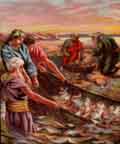
What makes a good red?  Well I am no expert and perhaps Father Martin could call on the Catholics at the Seven Hills Monastery in Clare SA, who make a great red, to inform us in some detail.  But what I do know is that the best red wines come from the grapes that grow on the oldest vines; the vines that were planted more than 100 years ago.  These grapes produce the best wine because their juice is sourced from a knotted vine which has roots spreading deep below the surface.  The grapes provide the best juice because they grow on stems that bud out of and remain in age old branches that are every reliable and able to provide life through its veins 

Jesus said ‘I am the vine; you are the branches. If a person remains in me and I in him, they will bear much fruit; apart from me you can do nothing.’  Jesus uses the beautiful analogy of the vine and grapes to teach his hearers, his disciples and you and me, the churches here in Gilgandra, the source and power to produce good fruit in our life comes only through him.  Only by remaining in Jesus, only by receiving from Jesus, can we do anything at all, that is seen by God to be ‘good fruit’.  If the citizens of Gilgandra are to enjoy the fruit we produce, the fruit of the Christian churches, we, who are believers, and who attend church, actually need to freely receive before we can freely give.  A bunch of grapes are filled with nutrients because they receive from the vine; we are first filled by what Jesus offers before we in turn can give.

Many of us, particularly those who are passionate about being disciples of Jesus, have fallen into the modern trap of believing that Jesus is the CEO of his church.  And like a corporate executive, he demands results from his workers.  He is only pleased with us, we imagine, when we go it alone on our own efforts and initiatives to bear fruit.  He is only happy, we believe, if we bear fruit by applying to our lives our own biblical principles for improving our moral standards. 

We train ourselves in spiritual disciplines and implement our own rigorous personal development programs in order to bear the fruit…the fruit he expects of us as disciples.  With this image in our mind, we take Jesus to be our task master and we work harder to produce results, to bear fruit and work longer hours to see the benefits and of course, in this financial crisis, he expects us to do this efficiently and cost effectively! 

Our modern work ethic would have us believe the harder we work, the more effective we will be in bearing fruit.  But what is Jesus saying to us in today’s context?  How are we to bear more fruit so others may receive from us?  What is Jesus business principle, if you would be game to call his word that?  Work more to bear more?  No…’remain in me and my word and you will bear fruit, apart from me you can do nothing.’  First receive then give. 

This is Jesus word to his church, to us today who so dearly want to bear fruit so that more people may to come to faith.  Jesus is not our CEO, director or even our task master, who takes, takes, takes.  The good news is that he is our savior, our shepherd, our vine who gave his life, his blood, and who gave of himself so that we may live and grow in him, as he says ‘for the Son of man gave his life as a ransom for many.’

A grape must first grow full of juice through the nourishment of the vine, before it gives of itself so we may enjoy a nice red.  We need to remain in Jesus and feed on him and be nourished by him, grow full in his grace and truth, before we can bear fruit in our lives to give of ourselves to the community.  Jesus, in John 6 encourages us to remain in him and feed on him, like a grape feeds on a vine, ‘Just as the living Father sent me and I live because of the Father, so the one who feeds on me will live because of me.’ 

We need to receive something before we can bear fruit and give, we need to live before we can die; die to bear fruit in service to others.  And the spiritual nourishment that Jesus provides and that we receive when we remain in him, is his word of forgiveness.  A word of pardon that says ‘neither do I condemn you go in peace’, and a word of forgiveness that says ‘the punishment that brought us peace was upon him, and by his wounds we are healed.’

Jesus is our source and strength, the fountain head of grace that empowers and equips us to bear fruit.  And what fruit and blessing are we as Christians, freely empowered with, that people need most in their lives?  Forgiveness!  We are forgiven and are now in a right relationship with God, as Paul writes in Romans ‘While we were still sinners, Christ died for us.’

Forgiveness is a free gift from God, given and received by faith.  Freely received, now freely we give.  A word of pardon from Jesus himself that brings peace and not condemnation into a broken relationship; A word of forgiveness that builds up someone living with shame; A word of release from a cycle of violence and bitterness that imprisons so many families, so many couples.

Government agencies can provide money and housing.  Police can provide protection.   Community groups can provide food and clothing.  But only Christians, empowered with the gospel of Jesus, can provide forgiveness.  Only the church, that has freely received can freely give of itself for the sake of others, even its enemies.  Only the church, the one body and one Spirit; only the church, empowered with the one hope, one Lord, one faith, one baptism, can bear fruit and bring the peace that passes all understanding. 

Jesus said ‘If you remain in me and my words remain in you, ask whatever you wish, and it will be given you. This is to my Father’s glory, that you bear much fruit, showing yourselves to be my disciples.  “As the Father has loved me, so have I loved you.’  You are loved by Jesus, remain in that love, be filled by that love and go in the joy of that love and bear much fruit in that love, as he has promised.  Amen

Glory in suffering

Glory in suffering  Mark 10_35-45


An opportunity too good to miss!  Two fishermen, James and John, the sonsfishing of Zebedee, with nothing but a small boat, smelly clothes and a few torn nets, heard the voice of Jesus say ‘come follow me!’  Not knowing what lay ahead, or where Jesus would lead them, they left everything and followed him.  Now, once again, an opportunity too good to miss beckons them.  Jesus, the one they left everything in order to follow, is talking about God’s kingdom and how he is about to inaugurate its rule in heaven and on earth.  James and John sense something important is happening, and want a big part in Jesus’ kingdom;
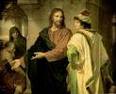
“Teacher,” they said, “we want you to do for us whatever we ask.” “What do you want me to do for you?” Jesus asked.  They replied, “Let one of us sit at your right and the other at your left in your glory.”  James and John have an opportunity too good to miss, at last, a chance at glory, at honour and a chance be someone important.  A big ask you may say, wanting glory out of someone else’s hard work and effort; taking the cream without the cake.

For Jesus said to the disciples, just a few words before, how he was to reign in his kingdom ‘We are going up to Jerusalem,” he said, “and the Son of Man will be betrayed to the chief priests and teachers of the law. They will condemn him to death and will hand him over to the Gentiles, who will mock him and spit on him, flog him and kill him. Three days later he will rise.’  Failing to understand or comprehend the suffering Jesus must endure to be king, James and John only see an opportunity at glory; they ask to be rulers with him at his right and left; rulers in a kingdom they know very little about.

Yet isn’t this sort of behaviour, taking the glory for our selves without the hard work and suffering, what we are all doing?  What is advertising and commercialism all about…giving you and me an opportunity too good to miss!  This year on Mount Panorama in Bathurst, Holden won the prestigious ‘king of the mountain Bathurst 1000’.  But now, thanks to advertising and commercialism, you and I can be part of the glory without any suffering or hard work.  You can be like James and John and demand your part of the glory, simply by wearing Holden merchandise.  (hand out stickers and hats etc.)

By wearing the name Holden, people see you as part of a winning team; you are now someone who also won on that day; by wearing the team colours, by possessing the badge of the lion, you are now someone who can celebrate as if you own the team.  By the trickery and allusion of advertising, you, who are really a ‘nobody’ in the world of car racing, instantly become part of a winning team.  Yet all this without touching a spanner, changing a tyre, or putting your life on the line by driving at 300 km/h.  Commercialism offers  an opportunity too good to miss…for us who are no bodies, we can have glory without suffering, winning without racing and be kings in a kingdom we know very little about.

It is very easy for us to transfer the idea of advertising and its promises of glory without suffering into our church and commercialise Jesus and our faith in him. Are we the James’ and John’s of the 21st century?  We are at a point in time now, when we need to ask ourselves a sobering question…who is Jesus to me and what do I expect from him?  If you believe in the Jesus of the advertising hype, you can be part of the glory of God’s kingdom without the suffering, without even knowing anything about Jesus. 

No longer do you need to go to church, forgo weekends and evenings for studying God’s word.  No longer do we need to repent of our sins, put to death our sinful lusts and call on the Spirit to renew our hearts.  No, commercial Christianity, or as Luther put it, a theology of glory, says, ‘ticking ‘Christian’ in the sensus papers,  wearing a Jesus tee-shirt, having a Jesus coffee cup in the cupboard, and buying a snazzy looking bible for the book shelf , is suffice enough to demand of Jesus ‘Let me sit at your right hand in your kingdom of glory’. 

Like all advertising, a commercialised faith, without baptism, without confession of faith, without the means of grace in Holy Communion, without servant-hood and suffering, can only promise glory but never deliver.  A theology of glory can be as empty and irrelevant to true faith and salvation as it is for me to claim to be the winning Holden driver just because I wear a Holden Jacket. 

Jesus urges and teaches James and John, and us and all believers that suffering and persecutions, servant hood and self-denial come before glory.   The kingdom of God is like an upside down pyramid; the panicle must carry the greatest load; the first and greatest must be the least and servant of all; they must carry the load of others.  That is why Jesus answered James and John ‘You don’t know what you are asking for”. “Can you drink the cup I drink or be baptized with the baptism I am baptized with?’  

Isaiah foretold of the cup Jesus must drink to the dregs for our sin and the baptism he is to endure for our glory.  Jesus is to be the pinnacle of the upside-down pyramid of God’s kingdom; he is the greatest, yet becomes the least; the king of heaven becomes our servant who bears our load;  ‘By oppression and judgment he was taken away… For he was cut off from the land of the living; for the transgression of my people he was stricken. He was assigned a grave with the wicked, and with the rich in his death, though he had done no violence, nor was any deceit in his mouth…Yet it was the LORD’s will to crush him and cause him to suffer.’  And Jesus adds ‘For the Son of Man came to give his life as a ransom for many.

We want the glory without suffering, Jesus had the glory, but chose to suffer, in order to share his glory with us, as the writer of Hebrews says ‘But we see Jesus, who was made a little lower than the angels, now crowned with glory and honor because he suffered death, so that by the grace of God he might taste death for everyone. In bringing many sons to glory, it was fitting that God, for whom and through whom everything exists, should make the author of their salvation perfect through suffering.’

In our baptism, we died to ourself.  Jesus took our old life of sin and false glory and gave us his life.  He exchanged his glory for our sin; he gave us what is his and took upon himself what is ours…we are born again by water and the Spirit into God kingdom through the suffering Jesus endured on the cross.  As St Paul says, ‘our life is hidden in Christ.’  We already live in glory with Jesus, but it is hidden from sight, it is a statement of faith, as we confess in the creed ‘I believe in the holy Christian church, the communion of saints’.

Since we believe and know this to be true, in Christ, we are now called to lay down our pursuit for glory and to suffer just as Christ suffered.  We too are to be the least and servant of all.  We too now exchange glory for servant hood, exchange power for service of the gospel, exchange the Jesus coffee cup, for a cup of suffering.  So do not be surprised if your life in Christ is not what you expected or what the commercialised Jesus claims it should be.  Living a theology of the cross is what Jesus meant when he said ‘You know that those who are regarded as rulers of the Gentiles lord it over them, and their high officials exercise authority over them. Not so with you. Instead, whoever wants to become great among you must be your servant, and whoever wants to be first must be slave of all.’

Are we prepared to suffer for our faith?  Is the church shrinking because it no longer wants to suffer persecution for the sake of Jesus?  Is suffering for the sake of the gospel an opportunity too good to miss?  Let me close with some quotes from famous Christians who have received their reward in heaven, and let you make up your own mind.

‘Every time her blood was shed, each drop became a man, and each man thus converted stood prepared to pour out the vital current from his veins to defend the cause…Christ’s church never sails so well as when she is rocked from side to side by the winds of persecution…Nothing has helped God’s church so much as persecution – Charles Spurgeon.  And ‘Be of good comfort, Master Ridley, and play the man.  We shall this day light such a candle, by God’s grace, in England, as I trust shall never be put out.’  Hugh Latimer, to Nicholas Ridley as they were being burned at the stake.

Suffering for the sake of the gospel…an opportunity too good to miss…!!! or ???

The righteousness of Christ

Mark 10_17-31 the righteousness of Christ


What would things look like if Satan really took control of a city?  Over a halfrich young ruler century ago, Prespyterian minister Donald Grey Barnhouse offered his own scenario in his weekly sermon that was also broadcast nationwide on CBS radio.  Barnhouse speculated that if Satan took over Philadelphia, all the bars would be closed, pornography banished, and pristine streets would be filled with tidy pedestrians who smiled at each other.  There would be no swearing.  The children would say, ‘Yes, sir’ and ‘No ma’am, and churches would be full every Sunday…where Christ is not preached. (Christless Christianity by Michael Horton pg 15)

Quite the opposite to what you or I may have envisaged, yet very insightful, and could very well be close to the truth. Why?  Why would Satan want everyone be well behaved, loving and accepting toward each other, attending church, and doing all the right things, and yet not hearing Christ preached?….Then sin would not be preached.  The great divide which separates us from God…our sinful nature, the fact that ‘no one can enter the kingdom of God unless they are born again’, would not actually be addressed. 

The offence of preaching the cross would be replaced with the more acceptable preaching of love and moral improvement.    Everyone would be obeying the law, but no one would be keeping it; not to God’s standards, as Jesus demands in Matthew 5 ‘Be perfect, therefore, as your heavenly Father is perfect.’ Everyone would be nice, but no one would be saved.

A rich young ruler came to Jesus and said ‘what must I do to inherit eternal life?’  This is a question about justification; a question which asks, ‘HOW perfect do we need to be to enter heaven?’; a natural question that you and I may even ask; a question that presupposes and has as its premise the assumption that we CAN do enough to get to heaven and the decision is ours.  You may not ask this question to God in such an arrogant way, as this young man did, but there are other more subtle ways we ask the same justification question, which ignores the reality of our sin ‘what must I DO to inherit eternal life?’

Deep in your conscience you may be making deals with God; deals that involve improvement on our behalf to gain God’s favour?  Perhaps, you may say, if I just put more effort into my marriage, then God will look favourably upon me and forgive my continuing failings.  Perhaps if I can just curb my lustful thoughts then God will be more gracious and overlook my sin.  Or perhaps if I am more accepting and loving to the ‘someone’ no one else loves, then God will love me more…then I will inherit eternal life…with God’s help of course. 

All deals about how WE are to justify ourselves …how WE are to enter eternal life, but all these deals between you and God are of no use because they do not flow out of the gospel of Christ; and as long as Christ is absent, we remain under the demands of the law and original sin is not dealt with and eternal life is not inherited.

When the rich young man came to Jesus with a question on justification, ‘what must I do to inherit eternal life?’, Jesus saw that he was living under the demands of the law.  He could see that this young man, try as he might, had spectacularly succeeded in missing the point of the law in relation to being right with God.  He had fallen into Satan’s world where everything is nice, where being good is the train bound for heaven and self-righteousness is the ticket to hop on board.  This man needed to hear just how hard the law’s demands really are.  We need to hear it is not what we do that justifies but who justifies!

Jesus sees the man and loves him and in love does quite the opposite to what we imagine.  Jesus, who St John said, came from the Father, full of grace and mercy, puts the man under the law…gives him even more to do.  ‘”One thing you lack,” he said. “Go, sell everything you have and give to the poor, and you will have treasure in heaven. Then come, follow me.” 

This friends is the correct use of the law…Jesus uses the sword of the law to cut through the sin of pride and self-righteousness, in order to reveal the futility of keeping the law to inherit the kingdom, as Paul writes in Galatians 3 ‘All who rely on observing the law are under a curse, for it is written: “Cursed is everyone who does not continue to do everything written in the Book of the Law.”

Jesus used the law to show this young man, that there is one thing he will not do.  One thing he cannot do; one thing he does not even have the will to do and that is, sell everything and follow him.  The conscience of the young rich man was hit by the double edged sword of God…swish…gotcha!  He went away with a sad face and unfortunately never hung around long enough to hear the comforting words of Jesus.

Jesus still speaks to us in our deals with him, in the same way.  If you want to justify yourself with God by trying harder to be good, you too, as I am, will be cut by the same sword of God’s word, and perhaps you have already experience this.  The more you try and stop lustful desires…the stronger and harder they become…the law demands ever greater obedience.  The more you try and love, ever more love is demanded of you.  The more you try to avoid temptation by your own effort, the stronger they become.  This will keep happening, and the sword of God will keep cutting our conscience, until we too join with the disciples and say ‘”Who then can be saved?”

Perhaps you have yet to experience this, or perhaps you are at this point now.  Or perhaps there has been a time in your life recently when you were sick of ‘trying to always be good’; sick of trying to live up to the ideal Christian life.  Perhaps you have even felt a failure before God and thought ‘Who then can be saved ‘?…good, that’s the law, the double edged sword of God’s word, cutting away any self righteousness to reveal sin and point you to Christ.  Hear Jesus’ words to Zacchaeus who also felt convicted ‘Today salvation has come to this house…For the Son of Man came to seek and to save what was lost.“  ‘Who then can be saved?’ For with us, salvation is impossible, but with God all things are possible.’

The good news is that we are justified, made right with God by trusting in Jesus who was put to death on the cross; put to death in order to put right the wrong.  Paul writes in Colossians 2 ‘When you were dead in your sins and in the uncircumcision of your sinful nature, God made you alive with Christ. He forgave us all our sins, having canceled the written code, with its regulations, that was against us and that stood opposed to us; he took it away, nailing it to the cross.’ 

The gospel, or Christ preached into our hearts deals with sin; deals with the question of justification.  Once you take hold of this gospel by faith, that Jesus has already justified us and given us eternal life in our baptism, the question ‘What must I do to inherit eternal life’ becomes irrelevant; pointless.  

After all, its an oxymoron, you cannot work to gain an inheritance, an inheritance is given when you are born into the family.  St Peter declares ‘Praise be to the God and Father of our Lord Jesus Christ! In his great mercy he has given us new birth into a living hope through the resurrection of Jesus Christ from the dead, and into an inheritance that can never perish, spoil or fade– kept in heaven for you.’

A historic decision was made at general synod last week, which will reinvigorate faith and joy by rediscovering the power of the gospel through the reintroduction of private confession and forgiveness into our church.  Private confession and forgiveness is a rite which enacts the sword of God’s word of law and gospel to bring repentance and faith.  This rite allows God to speak into our lives and into our hearts in a personal way by giving us an opportunity and safe place to confess our sins and to receive a personal absolution as if from Christ himself. 

Let me read (Pg 56 7.2.2)

I commit this to you for prayerful consideration and plan to teach and preach about the use of this rite in the expectation that this congregation will be able to make regular use of this gift to us from God in the following years.  Amen